How
has Frank Lloyd Wright’s work developed over time to express a 19th
Century architecture?
Let
us first address this question by stating that Frank Lloyd Wright lived from
1867-1959, so he was a very late 19th / early 20th century
architect. Never-the-less, he was
influenced by the Art Nouveau period and even previous European
architects. But when saying that Wright
expressed a style of architecture, it should be said that he created a truly
American style of architecture. Given
one of his prime goals was to fit within the context of the landscape. It would not take much to imagine that had
FLW started in Switzerland for example, he would have created what would become
a Swiss architecture. Having absorbed
European influences and designing in the United States, Wright’s work grew into
something that would be looked upon as the forefront of architecture. And that front would be the American Prairie
Style.
Start
at the Winslow House (1893) in River Forest Illinois. Here, Wright could really experiment with the
American dwelling. The house would be
his canvas while the flat Midwestern plains would be his backdrop. Many of the features of this house attempt to
push the visual height of the two-story house down toward the ground. The long strips of masonry, the wide Roman
bricks, and the short low pitched roof act together to achieve this
language. So, FLW was trying to make his
building something more than just a stand-alone object. This was one of the first attempts to really
bring nature and an emotional quality to the home. Being one of the first works, there are still signs of the Art Nouveau ideals. Floral designs and highly decorative structure pieces highlight certain moments in this house. Some influences from Ruskin can be seen here
as well. There is honesty in the
materials. Nothing is covered up or
painted in a way that suggests the object is something it is not. Wright allows the materials to speak for
themselves as an emotional response to the site. As his designs progressed, so did the depth
and meaning of these relationships.
 |
| Winslow House (source: franklloydwrighttour.com) |
 |
| (source: steinerag.com) |
A
few years later, Wright would design the Heurtley House which was one of the
first true Prairie designs. Here, the
influence of Ruskin can really be seen in the idea of craft. This time it is not the craft of the builder
or stone mason but that of the architect.
The little details become important to the total work. The details and spaces they form create a
story and an emotional experience as the user moves through the entire
space.
 |
| Heurtley House (source: designwire.interiordesigns.net) |
It
is also here that the ideas of Semper (1803-1879) come into play. Whereas before the plan had been adopted
after the form of the house, the Heurtley House and the like after it contained
a unification of envelope, plan, and function.
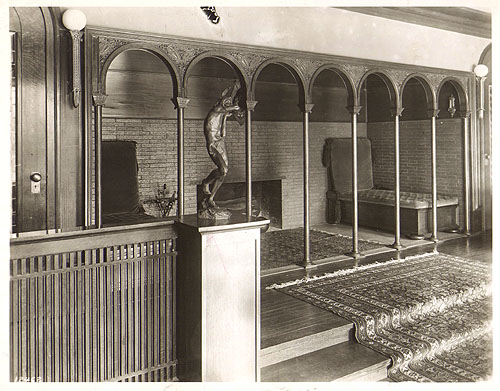
Wright took the four key principles (the hearth, platform, roof, and
enclosure) and allowed them to blend in one language. As seen in the Robbie House, the roof extends
to such depths that it becomes the enclosure for outdoor space. He also really takes Semper’s “formula” into
the design as well. Wright understood
the site beautifully at Falling Water while going so deep that he wanted
certain personal emotions brought from even the dinnerware. This is where there seems to be the noticeable
clash of influences from Ruskin and Semper.
Material and craft were so important as it can be clearly seen how
Wright put his hand on every square inch of his designs.
 |
| The Hearth (source: decoratinglflair.com) |
| Falling Water (source: wright-house.com) |
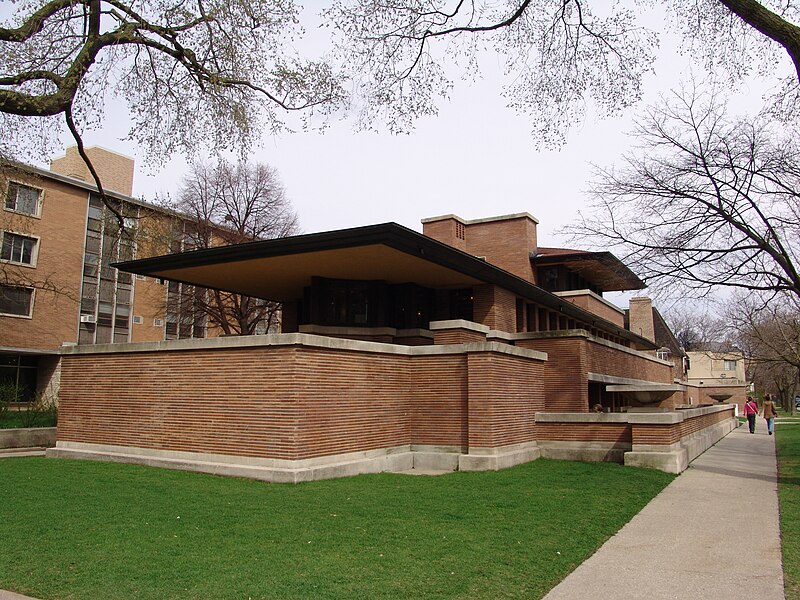 |
| Robbie House (source: wikipedia.com) |
There
should be one more point made about materiality that puts Wright in his time
and sets him apart from that of Ruskin.
Ruskin believed that modern technology was the end of architecture and
it would destroy craft. Wright did believe
in honesty in materials. He rejected the
Ecole de Beaux Arts, which seems to say that did not believe in ornamentation
for its own sake, but rather as a function of the work. He also understood that modern technology would
allow him to achieve his larger goals.
It would be steel that would create Wright’s iconic cantilevers. Though it might have been a slight crutch,
steel would allow him to create the from that matched the Prairie Style as a
concept. It brought it to a
reality.
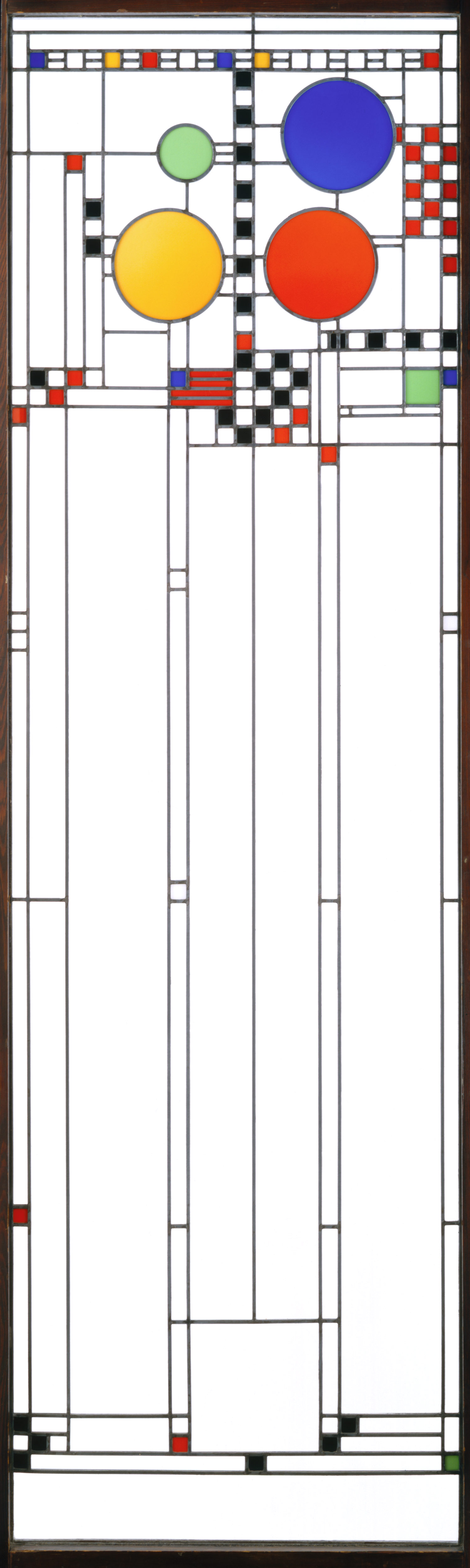
One more point does have to be made on Frank Lloyd Wright and his Prairie Style. The detail that he uses is not exactly ornate but it is meaningful and well as beyond iconic. His ornamentation takes real ideas and real objects, like trees for example and translates them into a figurative form or a style of abstraction. Clearly this comes from the de Stjil movement which takes these large ideas and breaks them down into a single visual moment. It becomes a way for Wright to add logic to his ornamentation opposed to random and excessive detail.
 |
| Window Designs (source: cassbeth.com) |

No comments:
Post a Comment