Objective:
Trace the development
of an idea relating to the emergence of modern architecture.
This blog post will attempt to solve the objective by taking an element in
architecture (and depending on your beliefs, this could be anything under the
sun) and understanding how it either influenced the progression or how it evolved
because of modern architecture. If we
look, industry was shaped and influenced the modernist movement as well as government,
art, social conditions, and more. Here,
the focus will be the human mind and the intelligence of people. This may seem abstract, but it should make
more sense if I parallel the human mind with the progression of man and his way
of thought. There is a link between this
growth of the intellect, the mind, and how architecture has made this shift
into modernism.
Let us start with the Arts and Crafts period in architecture. The people who claim this period are going
against the idea of new technology and industrialization. They want to cling to the old ways of the
handmade and focus on their details.
This is something primal in humans at the time. It is a call back to the architectural “stone
age.” It was thought that only good work
could come from the labors of the body, the skill of the hands, and the talent
of the craftsmen. So it is here where
the human mind begins. It is a new born
infant who cannot think for itself and must be cared for. It can only see what is placed before
it. It sees the superficial beauty in an
object. Delighted in this, the infant
seeks more of this from other things. He
relies entirely on his motor skills and not of his brain as it is in the
beginning of development. However, it is
only a starting point and not a means to an end. There is hope for the mind if it is willed to
be stronger and challenged by outside forces.
Without them, the infant will remain lame.
Next we find architecture accepting industry as a new venture in accomplishing
a new style. Still heavy set on
ornamentation, it simply uses a new material to relate meaning and purpose to
the user. And as technology advances, so
does the ornamentation. It is no longer
blind and make for its own sake.
Inspiration is found in nature and contrasted with its replication in heavy
iron. This turn in architecture is the
caveman’s first tool when he realizes how to create with his own mind. The infant uses a spoon instead of his hands
to grab his food. It understands that
things in the world exist for the betterment of his existence. Still entranced by the pretty things or the
ornamentation, he does not care what the spoon means as long as it is both attractive
and useful.
As the infancy years fade, architecture moves into expressing something greater
than just the visual. In Amsterdam,
explorations are made into architecture by understanding the function of space
and how it can be created through the use of materials. This is a grand step in the development of
modernism. For once, the focus is on the
individual and how he experiences the space not from a visual standpoint but as
a user moving through a building. It is
only then that the detail or ornamentation (what is left of it that is) is able
to explain how the building works as a whole.
So it is here that the infant has become a toddler, aware of his own
space and surroundings. He is now
concerned with where he sleeps, eats, and plays. He understands that each of these spaces have
their purpose. Given they might have
multiple, but the toddler is developing this special relationship in his
mind. He is still distracted by the
bright colors that occupy these spaces, but a major transformation has been
made in the mind.
What comes next is a dramatic shift in architecture once again with De Stijl
and Futurism. There is this movement to
simply the ornate and move forward in an aggressive and innovative manner. What had been known in the past was released
and made new by industry and the ability of the designer to really question
what he was seeing. Now, next point
could be well argued against, but I find the connection intriguing just the
same. Here the toddler is a young school
boy. He was taken from a life of
ignorance, bliss, and perfect content in his own little world. The boy is now violently placed among other
boys and girls and forced to learn and understand the world at a most primitive
level. Devoid of all glamour, color, and
shine, the basics must be learned before the child can progress. Now, he has his new tools – a pencil, a
protractor, or a crayon perhaps. These
will allow the child to understand what is placed before him, not to question
mind you, but to simply understand. This
is because there is something so fundamental about the De Stijl movement for
example that says we need to figure out where we are so we can ask questions
about where we are going.
Last is the emergence of the Bauhaus. It
is built on the foundations of the movements that came before it, but there is
a sort of refinement about it along with some sense of individualism or at
least a communal effort where the individual is acknowledged. The best way to go about this is to refer to
the child as before. Now in my own
experience, I can remember many people around the sixth and seventh grade
really start to form a sense of identity.
No longer are children being dressed by their parents nor are they
watching every step that they make.
Their minds are changing because they have their own interests and their
own tastes. Therefore, their exterior
presence and well as their behavior changes.
Here, architecture is doing the same as the pre-teenager. It is breaking past the mold of the many to
become more expressive. It may still
incorporate a mass of people, but the intentions are different. It still uses simple materials and a form to
bring forth meaning and purpose, but it is an advancement in the mind and how
people are viewing society and architecture together. Finally the mind is able to comprehend that
there are direct consequences to its actions for the others around it.
Wednesday, February 27, 2013

Wednesday, February 6, 2013
Influencing Frank Lloyd Wright
How
has Frank Lloyd Wright’s work developed over time to express a 19th
Century architecture?
Let
us first address this question by stating that Frank Lloyd Wright lived from
1867-1959, so he was a very late 19th / early 20th century
architect. Never-the-less, he was
influenced by the Art Nouveau period and even previous European
architects. But when saying that Wright
expressed a style of architecture, it should be said that he created a truly
American style of architecture. Given
one of his prime goals was to fit within the context of the landscape. It would not take much to imagine that had
FLW started in Switzerland for example, he would have created what would become
a Swiss architecture. Having absorbed
European influences and designing in the United States, Wright’s work grew into
something that would be looked upon as the forefront of architecture. And that front would be the American Prairie
Style.
Start
at the Winslow House (1893) in River Forest Illinois. Here, Wright could really experiment with the
American dwelling. The house would be
his canvas while the flat Midwestern plains would be his backdrop. Many of the features of this house attempt to
push the visual height of the two-story house down toward the ground. The long strips of masonry, the wide Roman
bricks, and the short low pitched roof act together to achieve this
language. So, FLW was trying to make his
building something more than just a stand-alone object. This was one of the first attempts to really
bring nature and an emotional quality to the home. Being one of the first works, there are still signs of the Art Nouveau ideals. Floral designs and highly decorative structure pieces highlight certain moments in this house. Some influences from Ruskin can be seen here
as well. There is honesty in the
materials. Nothing is covered up or
painted in a way that suggests the object is something it is not. Wright allows the materials to speak for
themselves as an emotional response to the site. As his designs progressed, so did the depth
and meaning of these relationships.
 |
| Winslow House (source: franklloydwrighttour.com) |
 |
| (source: steinerag.com) |
A
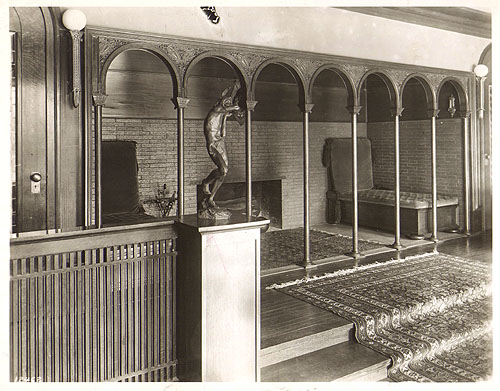
few years later, Wright would design the Heurtley House which was one of the
first true Prairie designs. Here, the
influence of Ruskin can really be seen in the idea of craft. This time it is not the craft of the builder
or stone mason but that of the architect.
The little details become important to the total work. The details and spaces they form create a
story and an emotional experience as the user moves through the entire
space.
 |
| Heurtley House (source: designwire.interiordesigns.net) |
It
is also here that the ideas of Semper (1803-1879) come into play. Whereas before the plan had been adopted
after the form of the house, the Heurtley House and the like after it contained
a unification of envelope, plan, and function.
Wright took the four key principles (the hearth, platform, roof, and
enclosure) and allowed them to blend in one language. As seen in the Robbie House, the roof extends
to such depths that it becomes the enclosure for outdoor space. He also really takes Semper’s “formula” into
the design as well. Wright understood
the site beautifully at Falling Water while going so deep that he wanted
certain personal emotions brought from even the dinnerware. This is where there seems to be the noticeable
clash of influences from Ruskin and Semper.
Material and craft were so important as it can be clearly seen how
Wright put his hand on every square inch of his designs.
 |
| The Hearth (source: decoratinglflair.com) |
| Falling Water (source: wright-house.com) |
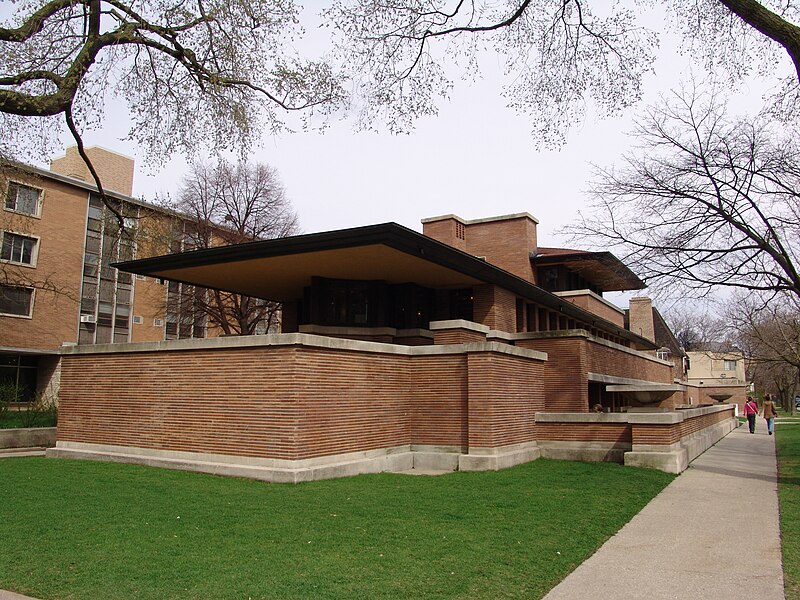 |
| Robbie House (source: wikipedia.com) |
There
should be one more point made about materiality that puts Wright in his time
and sets him apart from that of Ruskin.
Ruskin believed that modern technology was the end of architecture and
it would destroy craft. Wright did believe
in honesty in materials. He rejected the
Ecole de Beaux Arts, which seems to say that did not believe in ornamentation
for its own sake, but rather as a function of the work. He also understood that modern technology would
allow him to achieve his larger goals.
It would be steel that would create Wright’s iconic cantilevers. Though it might have been a slight crutch,
steel would allow him to create the from that matched the Prairie Style as a
concept. It brought it to a
reality.
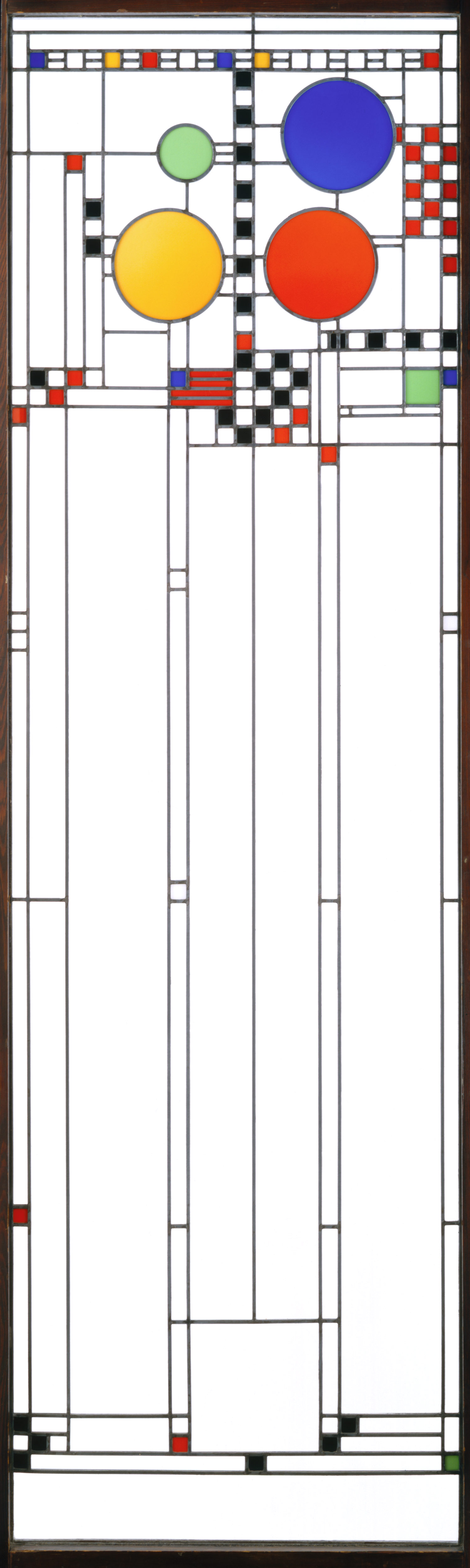
One more point does have to be made on Frank Lloyd Wright and his Prairie Style. The detail that he uses is not exactly ornate but it is meaningful and well as beyond iconic. His ornamentation takes real ideas and real objects, like trees for example and translates them into a figurative form or a style of abstraction. Clearly this comes from the de Stjil movement which takes these large ideas and breaks them down into a single visual moment. It becomes a way for Wright to add logic to his ornamentation opposed to random and excessive detail.
 |
| Window Designs (source: cassbeth.com) |
Subscribe to:
Comments (Atom)