Tuesday, April 30, 2013

architect - a manifesto

The Lateral Thinker
You do not solve a problem like that of an engineer.  The engineer moves from A to B in the most logical and efficient manner as possible.  This is not belittling to the engineer as this is often a desired attribute in the creation of many things.  What this does however, is eliminate the human element.  You should solve the problem as a person and not as a machine.  Mathematics, physics, music, and astronomy are all tools for your disposal.  They are not to dictate your design, but rather you should orchestrate these tools to inform what your product will become.  By doing this, you may find that there is not one clear solution to a problem.  A simple object can be used as an example.  Mathematics may tell you to make a sphere, while physics tells you to make a heavy sphere, and all the while astronomy is informing you of the sphere’s orientation.  As it may seem, this can lead to an exact answer.  Now introduce the human element and you will begin to have questions.  What emotion does my sphere evoke?  How does my sphere effect what it surrounds or are the surroundings effecting the sphere?  These questions should lead to a humanization of the design and it will set your design apart from the engineered product.  You should also ask in the end, does this product solve the problem?  Maybe it does, but it is not necessarily directed toward Point B from Point A.  It may be found that you have diverted from the path slightly to make the product more meaningful.  It may also be the case that you have questioned the meaning of the solution and found that the solution itself is not appropriate, and in turn created Point C in which better responds to humanity.
Experience in Arriving to a Solution
It is impossible in the time and space we occupy to not engage any one of our senses when experiencing an object or space.  You may walk blind, but your feet will hear for you.  You may not eat, but your nose will taste for you.  When you are creating, it should be for the intention that it will in one way or another be experienced by people.  The products which are not intended for people can be the engineered products as I mentioned before.  Keep in mind the experience of a solution.  These are things that if ignored, fail to effectively engage the user.   

Multiple Paths for a Solution
There will always be new ways of exploring an idea.  You may find that your design is excellent in every way possible.  You have explored every aspect of the experience of your design and followed through accordingly.  Your follow up may find that your design satisfies every need of the user.  The fact is, however, that your flawless design is not the ONLY flawless design.  Your emotions, life experiences, attitudes, and ideals were all mixed into the design whether you were conscience of this or not.  Therefore a person of opposite ideals and comparatively radical lifestyles may find a solution equally effective in every way possible and yet have no feasible similarity to your design.
What Does an Architect Create?
To effectively answer this question I have laid out before me, I shall say “an architect should” instead of “an architect does.”  The following will be what I believe a true architect should be creating, because there are many architects in the profession who do not trend in the manor of my following statements. 
To put it in the broadest of terms, an architect should create everything.  Now, I am not saying that an architect should be standing next to a car designer critiquing on his every stroke, nor am I saying that he should be there to suggest design to any other creation made.  The architect should design what is around him in a way that expresses who he/she is as a person. 
The first thing that you might go to in your mind is the clothing an architect wears.  Too often I see architects wearing typical office attire, the suit and tie.  This either suggests conformity to a social norm or the lack of real design integrity by the architect.  I will not make a suggestion of a certain style, but I would say an architect needs to compose himself like a building.  Each piece needs to work in harmony with each other while making a statement or having purpose. 
Take an example of an article of my daily attire, a black metal watch.  The watch itself is a statement on its own because we have become too connected to the cellular devices that are supposed to make our lives simpler.  It is a statement to a time that was in fact simpler.  The black metal has a lower wealth appearance than silver or especially gold which relates to my situation as a student of architecture.  The idea is that I have not designed the watch, instead allowed the watch to speak to others about my inner self. 
Now imagine a broader view of what surrounds an architect…his desk, pen, paper, daily schedule even.  These are all opportunities for creation and design.  Frank Lloyd Wright was famous for constructing complete works of art.  He would physically design the silverware for some of his residential designs.  This method is often too laborious and cost intensive, but it serves as an idea to remind us that we are a composition as a person and everything around us will reflect what is kept inside.  
Who Does an Architect Design For?
I want to answer this one quickly because I believe that in this manor is will be most received. 
Design for People
Well what about nature and the environment?  If nature did not directly affect humanity then we would not be concerned with it.  Since nature and the environment are symbiotic with people, then we design for both.  It is very simple, but when contemplated, very deep.
Why Does an Architect Design?
Passion.  There should be no other reason.  You may say that you want to design to better people’s lives or save the world.  That is a splendid idea and I encourage you fully.  But without passion, you will fail.  Passion must be the driving force behind every idea and every concept that comes from your mind.  Passion is what will make your design believable to people.  It is what will make people truly feel what you have created and they will experience your design the way it was intended.  We have all seen works that were pushed by deadlines, half-hearted by the ill-interested, or stamped out by the one who does not carry design in his heart.  These works fall short of their potential.

Where Does Design Take Place?
Where does it all happen?  Does it occur at a desk in an office from the hours of 8am – 5pm? Does it occur in a board room with clients and consultants?  Well, yes actually, it does occur in those places.  Collaboration is a great producer of design and innovation.  But it is not where ALL design takes places.  The car ride from the office to your home, on the couch while watching television commercial, or in bed right before you fall asleep can all be places of design.  In essence, design occurs in your mind.  And if you are a true architect or a true designer, your mind never shuts off.  It is always thinking of ways to improve, change, or adapt one thing or another.  You should allow your mind to always be open to new ideas, because then you will start making connections to things you never thought possible.  All of a sudden a woven basket informs you on the structure of a building, or the smell of coffee in your kitchen brings to life how you are designing a café.  Allow the process to continually flow, but more importantly…keep a pen and paper close near at hand.


n   


I want to thank you, the reader, for your time and patience with this writing.  It was a small step into my mind, and I was able to finally unleash some of the thoughts which have been swirling around.  If anything is gained, I hope you take away the meaning of the word architect, because it is not just a creator of buildings.  He is rather a creator of environments by manipulating the existent into an experience.  So go out into the world and be an architect.

Thursday, April 4, 2013

Mies van der Rohe and le Corbusier on the Open Plan


The floor plans developed by Mies van der Rohe are unique from their counterparts of their time yet they walk the lines of Modernism.  Although they follow the laws, they advance the principles and refine what a modern building can become.  It is a refinement in simplicity that is designed to speak to a new world in the emergence of new technology.

The first order of business for Mies was to throw out all previous conceptions of the floor plan.  He was not the first to create the free plan but he focused the idea to a very literal point.  In order to do this, Mies first determined that the room of a space did not influence the plan, nor is there any center to the house.  Frank Lloyd Wright’s “hearth” is nowhere to be found.  One of his first famous works, The Country Brick House, keeps walls as structure but gives them a new purpose.  A single wall is not designed to simply serve one space.  Instead Mies allows these planes to intersect the house and define multiple spaces.  As this happens, the spaces themselves begin to intersect not only visually but physically as well.  It is no longer a matter of being in one space and having the ability to see into another.  This creates visual fluidity alone.  Mies pushes the planes beyond the normal point of termination.  In plan, a horizontal wall in one space is pushed to become a vertical wall in another.  This physically brings one space into another by continuation of the material.

The Barcelona Pavilion would be another refinement of Mies’ own ideals in regard to plan.  Corbusier’s point about the free plan starts to take a very literal form.  Here, the column takes on the role of the wall and because of its importance, it is decorated as such.  The walls become partitions to solely to define space.  With the plan entirely free of any walls needed to support the roof, partitions are placed in the most minimal of fashions to simply define a space.  This extreme minimalism is liberating and free.

The 50x50 would have to be the pinnacle of the free plan by Mies.  It is a total elimination of anything that is unnecessary.  At this point, the plan does not say house.  It says space, and that is what it is.  Allowing the materials to be true, Mies creates a plan that serves its purpose at the most basic level a building can function which is to physically contain.  Visually, there is no containment, and the person is on display or rather nature is on display for the user.      

One could argue that this expression is designed to speak to the struggling culture and economy of Germany.  It says that through new innovations and technology, the German nation can be liberated.  It follows the tradition that Mies has been schooled in which is that of efficiency through technology.  Mies allows his steel columns and solemn partitions to stand for what they are and not stray from their purpose in a building.

--

The floor plan of Le Corbusier carries the ideals of an open plan but approaches the issue in a dramatically different way than Mies van der Rohe.  In order to understand the plan of Le Corbusier, one needs to understand his paintings from before.  At first glance they appear random, quirky, and distorted.  But as one who can reflect after knowing the style of Corbusier, there is a pattern or system that starts to come to the foreground.  There is a method of proportioning that is very evident that brings order to the piece.  It seems that this system and way of organizing space would follow Corbusier into his method of creating the plan as an architect. 

Let us examine Villa la Roche and Ville la Savoye.  Corbusier does in fact stick to his own principle of the open floor plan.  At first it appears that the spaces determine how the entire building is composed and the interior walls help form the structure.  In fact, this appears to be the opposite.  The plan is opened in the Villa Savoye by allowing a grid of columns to bear the weight of the building.  Villa la Roche uses a series of columns embedded in the walls to create the open plan. 

Now Corbusier is able to place walls, or partitions rather, where he sees fit to define a space.  When looking at the plan by itself, there is nothing open about it.  Many of the spaces appear to be closed and sectioned off from one another.  When the plan is moved into section, one can see how visual penetrations of spaces occur.  By being in one room but seeing into another allows the user to feel a larger sense of space.
 
The issue remains however, if partitions are freely placed but appear to close off space, how are the spaces organized?  I believe they are organized according to Corbusier’s mathematical scheme of dividing and ordering space.  It appears Corbusier thought that strict patterns, mathematical formulas, and proportions could lead to good design given the designer felt it was indeed good in the end.  He did not want to allow a space to exist simply happen because it fits.  Order was given to everything including his plan for both la Roche and Savoye. 

What Corbusier also included in his free plan for both buildings was a center point.  There is not a load bearing mass or central column in the center of these to villas but rather a void.  This void allows for the movement of people, thus he is putting the human at the center of the design.  It is from the atrium or the stairway that the rest of the plan is centered around. 

These ideas are extremely rooted in the classics.  Proportions and ordering systems were typical of Greek architecture.  They informed the structure to which a plan could then be designed.  These systems can be found in the plans and elevations of Greek temples.  The idea of the human center or holy center is also common in Greek architecture but goes back even further and across the globe.  Corbusier is attempting to revive these lost techniques of design and merge them with modern technology and materials to create a new style of architecture.  

Wednesday, February 27, 2013

Tracing Modernism

Objective:  Trace the development of an idea relating to the emergence of modern architecture.

This blog post will attempt to solve the objective by taking an element in architecture (and depending on your beliefs, this could be anything under the sun) and understanding how it either influenced the progression or how it evolved because of modern architecture.  If we look, industry was shaped and influenced the modernist movement as well as government, art, social conditions, and more.  Here, the focus will be the human mind and the intelligence of people.  This may seem abstract, but it should make more sense if I parallel the human mind with the progression of man and his way of thought.  There is a link between this growth of the intellect, the mind, and how architecture has made this shift into modernism.

Let us start with the Arts and Crafts period in architecture.  The people who claim this period are going against the idea of new technology and industrialization.  They want to cling to the old ways of the handmade and focus on their details.  This is something primal in humans at the time.  It is a call back to the architectural “stone age.”  It was thought that only good work could come from the labors of the body, the skill of the hands, and the talent of the craftsmen.  So it is here where the human mind begins.  It is a new born infant who cannot think for itself and must be cared for.  It can only see what is placed before it.  It sees the superficial beauty in an object.  Delighted in this, the infant seeks more of this from other things.  He relies entirely on his motor skills and not of his brain as it is in the beginning of development.  However, it is only a starting point and not a means to an end.  There is hope for the mind if it is willed to be stronger and challenged by outside forces.  Without them, the infant will remain lame. 

Next we find architecture accepting industry as a new venture in accomplishing a new style.  Still heavy set on ornamentation, it simply uses a new material to relate meaning and purpose to the user.  And as technology advances, so does the ornamentation.  It is no longer blind and make for its own sake.  Inspiration is found in nature and contrasted with its replication in heavy iron.  This turn in architecture is the caveman’s first tool when he realizes how to create with his own mind.  The infant uses a spoon instead of his hands to grab his food.  It understands that things in the world exist for the betterment of his existence.  Still entranced by the pretty things or the ornamentation, he does not care what the spoon means as long as it is both attractive and useful. 

As the infancy years fade, architecture moves into expressing something greater than just the visual.  In Amsterdam, explorations are made into architecture by understanding the function of space and how it can be created through the use of materials.  This is a grand step in the development of modernism.  For once, the focus is on the individual and how he experiences the space not from a visual standpoint but as a user moving through a building.  It is only then that the detail or ornamentation (what is left of it that is) is able to explain how the building works as a whole.  So it is here that the infant has become a toddler, aware of his own space and surroundings.  He is now concerned with where he sleeps, eats, and plays.  He understands that each of these spaces have their purpose.  Given they might have multiple, but the toddler is developing this special relationship in his mind.  He is still distracted by the bright colors that occupy these spaces, but a major transformation has been made in the mind. 

What comes next is a dramatic shift in architecture once again with De Stijl and Futurism.  There is this movement to simply the ornate and move forward in an aggressive and innovative manner.  What had been known in the past was released and made new by industry and the ability of the designer to really question what he was seeing.  Now, next point could be well argued against, but I find the connection intriguing just the same.  Here the toddler is a young school boy.  He was taken from a life of ignorance, bliss, and perfect content in his own little world.  The boy is now violently placed among other boys and girls and forced to learn and understand the world at a most primitive level.  Devoid of all glamour, color, and shine, the basics must be learned before the child can progress.  Now, he has his new tools – a pencil, a protractor, or a crayon perhaps.  These will allow the child to understand what is placed before him, not to question mind you, but to simply understand.  This is because there is something so fundamental about the De Stijl movement for example that says we need to figure out where we are so we can ask questions about where we are going. 

Last is the emergence of the Bauhaus.  It is built on the foundations of the movements that came before it, but there is a sort of refinement about it along with some sense of individualism or at least a communal effort where the individual is acknowledged.  The best way to go about this is to refer to the child as before.  Now in my own experience, I can remember many people around the sixth and seventh grade really start to form a sense of identity.  No longer are children being dressed by their parents nor are they watching every step that they make.  Their minds are changing because they have their own interests and their own tastes.  Therefore, their exterior presence and well as their behavior changes.  Here, architecture is doing the same as the pre-teenager.  It is breaking past the mold of the many to become more expressive.  It may still incorporate a mass of people, but the intentions are different.  It still uses simple materials and a form to bring forth meaning and purpose, but it is an advancement in the mind and how people are viewing society and architecture together.  Finally the mind is able to comprehend that there are direct consequences to its actions for the others around it.

Wednesday, February 6, 2013

Influencing Frank Lloyd Wright


How has Frank Lloyd Wright’s work developed over time to express a 19th Century architecture? 

Let us first address this question by stating that Frank Lloyd Wright lived from 1867-1959, so he was a very late 19th / early 20th century architect.  Never-the-less, he was influenced by the Art Nouveau period and even previous European architects.  But when saying that Wright expressed a style of architecture, it should be said that he created a truly American style of architecture.  Given one of his prime goals was to fit within the context of the landscape.  It would not take much to imagine that had FLW started in Switzerland for example, he would have created what would become a Swiss architecture.   Having absorbed European influences and designing in the United States, Wright’s work grew into something that would be looked upon as the forefront of architecture.  And that front would be the American Prairie Style.

Start at the Winslow House (1893) in River Forest Illinois.  Here, Wright could really experiment with the American dwelling.  The house would be his canvas while the flat Midwestern plains would be his backdrop.  Many of the features of this house attempt to push the visual height of the two-story house down toward the ground.  The long strips of masonry, the wide Roman bricks, and the short low pitched roof act together to achieve this language.  So, FLW was trying to make his building something more than just a stand-alone object.  This was one of the first attempts to really bring nature and an emotional quality to the home.  Being one of the first works, there are still signs of the Art Nouveau ideals.  Floral designs and highly decorative structure pieces highlight certain moments in this house.  Some influences from Ruskin can be seen here as well.  There is honesty in the materials.  Nothing is covered up or painted in a way that suggests the object is something it is not.  Wright allows the materials to speak for themselves as an emotional response to the site.  As his designs progressed, so did the depth and meaning of these relationships. 
Winslow House (source: franklloydwrighttour.com)
(source: steinerag.com)
A few years later, Wright would design the Heurtley House which was one of the first true Prairie designs.  Here, the influence of Ruskin can really be seen in the idea of craft.  This time it is not the craft of the builder or stone mason but that of the architect.  The little details become important to the total work.  The details and spaces they form create a story and an emotional experience as the user moves through the entire space. 
Heurtley House (source:  designwire.interiordesigns.net)
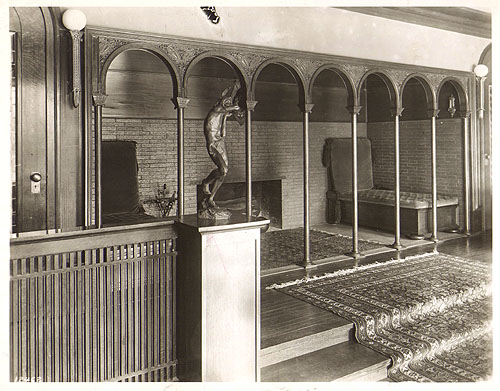
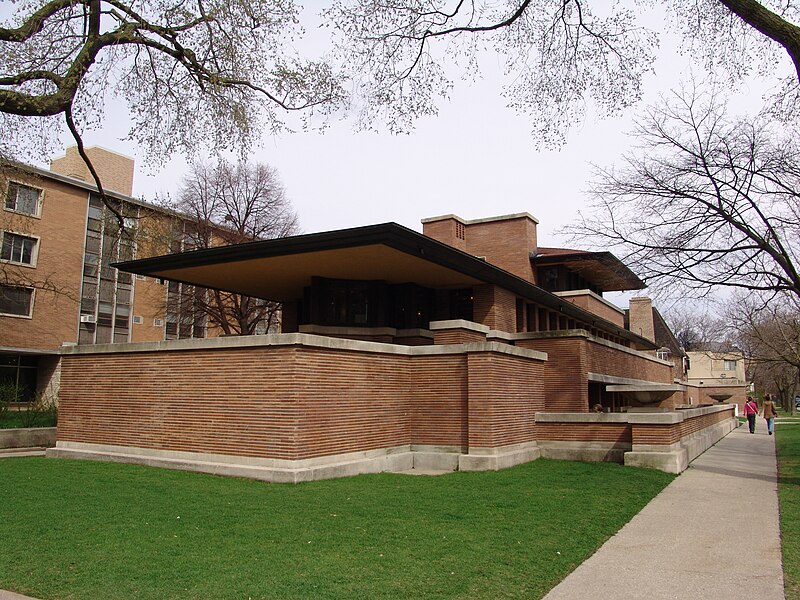
It is also here that the ideas of Semper (1803-1879) come into play.  Whereas before the plan had been adopted after the form of the house, the Heurtley House and the like after it contained a unification of envelope, plan, and function.  Wright took the four key principles (the hearth, platform, roof, and enclosure) and allowed them to blend in one language.  As seen in the Robbie House, the roof extends to such depths that it becomes the enclosure for outdoor space.  He also really takes Semper’s “formula” into the design as well.  Wright understood the site beautifully at Falling Water while going so deep that he wanted certain personal emotions brought from even the dinnerware.  This is where there seems to be the noticeable clash of influences from Ruskin and Semper.  Material and craft were so important as it can be clearly seen how Wright put his hand on every square inch of his designs. 

The Hearth (source:  decoratinglflair.com)
Falling Water (source: wright-house.com)
File:Frank Lloyd Wright - Robie House 2.JPG
Robbie House (source:  wikipedia.com)
There should be one more point made about materiality that puts Wright in his time and sets him apart from that of Ruskin.  Ruskin believed that modern technology was the end of architecture and it would destroy craft.  Wright did believe in honesty in materials.  He rejected the Ecole de Beaux Arts, which seems to say that did not believe in ornamentation for its own sake, but rather as a function of the work.  He also understood that modern technology would allow him to achieve his larger goals.  It would be steel that would create Wright’s iconic cantilevers.  Though it might have been a slight crutch, steel would allow him to create the from that matched the Prairie Style as a concept.  It brought it to a reality.   

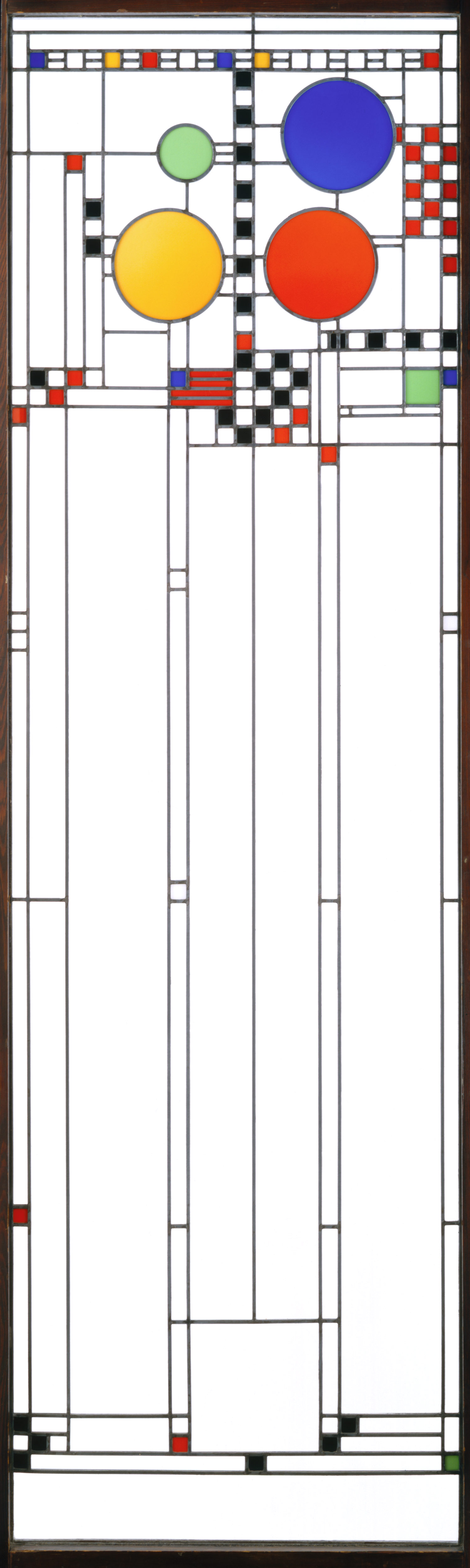
One more point does have to be made on Frank Lloyd Wright and his Prairie Style.  The detail that he uses is not exactly ornate but it is meaningful and well as beyond iconic.  His ornamentation takes real ideas and real objects, like trees for example and translates them into a figurative form or a style of abstraction.  Clearly this comes from the de Stjil movement which takes these large ideas and breaks them down into a single visual moment.  It becomes a way for Wright to add logic to his ornamentation opposed to random and excessive detail.  
Window Designs (source:  cassbeth.com)


Monday, January 28, 2013

Lost Architecture


Viollet le Duc, Ruskin, and Semper are all architects of the 19th century trying to find a new architecture or a new style to call their own.  Each take their own unique approach, and in the process, contribute to the great theories in architecture.

Ruskin, a gothicist, took an emotional stance towards the progression of future architecture.  He believed in the human reaction towards design, that is to say Ruskin was interested in the pure aesthetics of a work.  His mind was narrowed down to the finite details of projects; although architecture was found in the details.  He believed in the handmade, the craftsmen, and those who had a talent to bring to the world.  The craftsmen who laboriously carved each detail were the true builders of great architecture.  With them, design would live and die.  Therefore, this shows that architecture is trying to break the class barrier and bring everyone to an even level.  The masses have the most influence to design and it is in their quality that the quality of architecture can be seen.  So while this may try to overcome a social issue of the time, Ruskin fails to move architecture forward by rejecting the new creation of his own time – steel.  He saw steel as a harsh and foreign material that would destroy architecture, because he believed in the representation of nature.  Steel, as he saw, played no harmony with the earth and eliminated anything beautiful in design while eliminating the passion, creativity, and skill of the craftsmen.  This rejection of new technologies would hinder Ruskin from progressing architecture and creating a new style in the 19th century. 

Viollet le Duc, also a gothicist, took an almost mirrored approach to architecture.  Rational and strict, he analyzes the gothic style for what it does rather than its emotional characteristics or the skill that it takes to make.  He attempts to understand the gothic style from a functional point of view.  E.g. if an expansive hall is needed for a church, then structurally, the gothic style makes logical sense.  Side by side, the differences can be seen in the drawings of le-Duc and Ruskin.  The light and emotion is more than evident with Ruskin, while each supporting member and finite detail is carefully drawn out in the drawings by le-Duc.  

John Ruskin
(source:  http://25.media.tumblr.com)
Viollet-le-Duc
(source:  http://www.etsavega.net)


This structured way of thinking on architecture allowed le-Duc to escape emotion and allow new modern methods to influence his designs.  As steel is being produced, he is able to look at the material as a way to continue the expression of Gothic but in a new light.  le-Duc did not look at history as a guidebook for what should exist in his present but rather as a problem solving guide.  He could look at how people from the past expressed issues in their own society through architecture and use those methods for a new style.  For example, his lecture at Ecole de Beaux-Arts demonstrated that while the Greeks gave expression to the wonders of mythology so could the modern day give expression to the wonders of technology like steam and electricity.  He “must analyze the masterpieces of the past, reduce them to a process of argument, then apply the argument to his own problems.” (Summerson).  Therefore in his determination for finding a logical solution to architectural problems, he creates the Dictionnaire Raisonée.  This gives the architect not a handbook on design in the sense of aesthetics, but a list of pieces that can be assembled to form a work of art.  This really does prove opposite of Ruskin, because it puts the power of the design in the hands of one person, the architect, and out of the many, the craftsmen.  Now the architect can look at each readily made piece and assemble them for the function to which he desires. 

It should be noted that both Ruskin and le-Duc agreed on the manner in which these material were to be portrayed.  Whether hand-tooled or machine made, the material stood on its own.  It was not to be portrayed to be like that of another or hidden from view.  Thus the Seven Lamps and Seven Virtues were established to allow designers to understand the honesty in material.  This would follow through to the Arts and Crafts Movement and with the architect Semper.
Semper held the middle ground between Ruskin and le-Duc.  His unique scientific or mathematical approach attempted to analyze how architecture is created down to its most basic form while still understanding that architecture is of the people.  Semper was trying to solve a cultural issue but was doing it in a manner that it could be replicated for any space in time.  This is not to say one building in one location would work equally well in other.  Rather the approach he uses can be traveled across boundaries, because he sees architecture as “located…in the human mind” (Hvattum).  He takes architecture to a primitive state by saying the hearth, earthen work mound, woven enclosure, and wooden roof are what make up a society of people opposed to wonderers and drifters.  He also understands that it important to take into consideration the facts of a site or location for design while understanding the impacts of aesthetics.  These are combined in his calculation [ U=C(x,y,z,t,v,w…) ] so to understand that all of these components, not just some, must come together to complete an entire work of art that is complete and harmonious.  In this manner, style is able to evolve for any generation that should come to the forefront.  Each, given Semper’s design, should be able to analyze their own environment and establish a work that is needed for that location or function. 

Each of these architects, as previously mentioned, is trying to find a way to define themselves as a generation.  Ruskin appears to be a sort of architectural conservative and unwilling to budge from his passion for the craft, but it is not to say that craft of other sorts besides Gothic could come to define a new generation.  It appears Ruskin became too absorbed in Gothic to really explore new means of craft.  le-Duc offers the world the rational side of Ruskin by encouraging the intelligent designer to mold the work.  He really gives rise to modern architecture by challenging architects to think and ask “Why?” rather than replicate successes from the past.  Finally, Semper offers an approach to style based in simplicity.  By getting to the core of what is important in society, he is able to lay a foundation for new work to continue.

Sunday, January 13, 2013

Welcome

Greetings,

I am Kevin Galbreath, a fourth year architecture student.  This blog will follow a chronological order of historical readings on modern architecture.  As I move through these readings, I will briefly explain the architect at hand and then reflect about what was written.  The idea will be to understand what the architect was thinking or felt during a certain time period.  It is not enough to say Architect A designed Building X at such time period.  To understand the mind of the architect and the culture which inspires the idea, is then to understand the building.  So this is what I will be attempting to accomplish over the next few months.  Hopefully these writings will not only incorporate main ideas from the readings, but will include my own ideas, thoughts, and questions as well.